Your little one sings along to everything, presses every piano key within reach and starts dancing the moment music plays. So when should they start piano lessons? Is three or four too young?
It is a question almost every parent of a musical toddler asks. The answer is more encouraging than many people expect.
There is no magic age
There is no single birthday when a child becomes "ready for piano". Some children are eager at three, others take off at six or seven. What matters far more than age is whether the lessons are made for the child in front of you.
Three and four year olds learn differently from older children. They learn by doing: through songs, games, movement and plenty of repetition. Long stretches of sitting still and reading notes are hard work at this age. Music taught the way little ones naturally learn is a different story, and children can start building real skills surprisingly early. Singapore's own preschool curriculum framework, MOE's Nurturing Early Learners, is built on the same idea: engaging children in learning through purposeful play.
Why 3.5 to 4.5 is a lovely time to begin
Somewhere between three and a half and four and a half, many children reach a sweet spot. They can follow simple instructions, enjoy doing things with other children and soak up songs and rhythms quickly.
It is a wonderful time to lay the foundations that make piano easier later on: a feel for the beat, careful listening, finding their way around the keyboard and the confidence to have a go. Research also links active music-making with benefits for children's listening and language skills, concentration, creativity and social development. And a child who loves their first lessons wants to come back for more.
Signs your child is ready to start
You do not need to tick every box. If a few of these sound like your child, they are probably ready for a playful first class:
- They ask for the same songs again and again, and sing along
- They clap, tap or bounce to music, even if not quite on the beat yet
- They are curious about the piano and love pressing the keys
- They can follow a simple instruction, like "find the two black keys"
- They enjoy activities with other children
- They can stay with one activity for a few minutes at a time
Not there yet? That is completely normal. A few months make a big difference at this age.
What children aged 3.5 to 4.5 can really learn
In the right class, quite a lot! Little ones can learn to:
- Find their way around the keyboard, starting with the groups of two and three black keys
- Feel and keep a steady beat through movement, clapping and rhythm games
- Listen carefully, hearing the difference between high and low, loud and soft, fast and slow
- Sing simple songs and connect what they sing with what they play
- Recognise notes and play simple tunes with a few fingers
- Build good classroom habits: focusing, taking turns and following along
Group class or one-to-one?
Both have their place, and many children start in a group before moving on to one-to-one lessons.
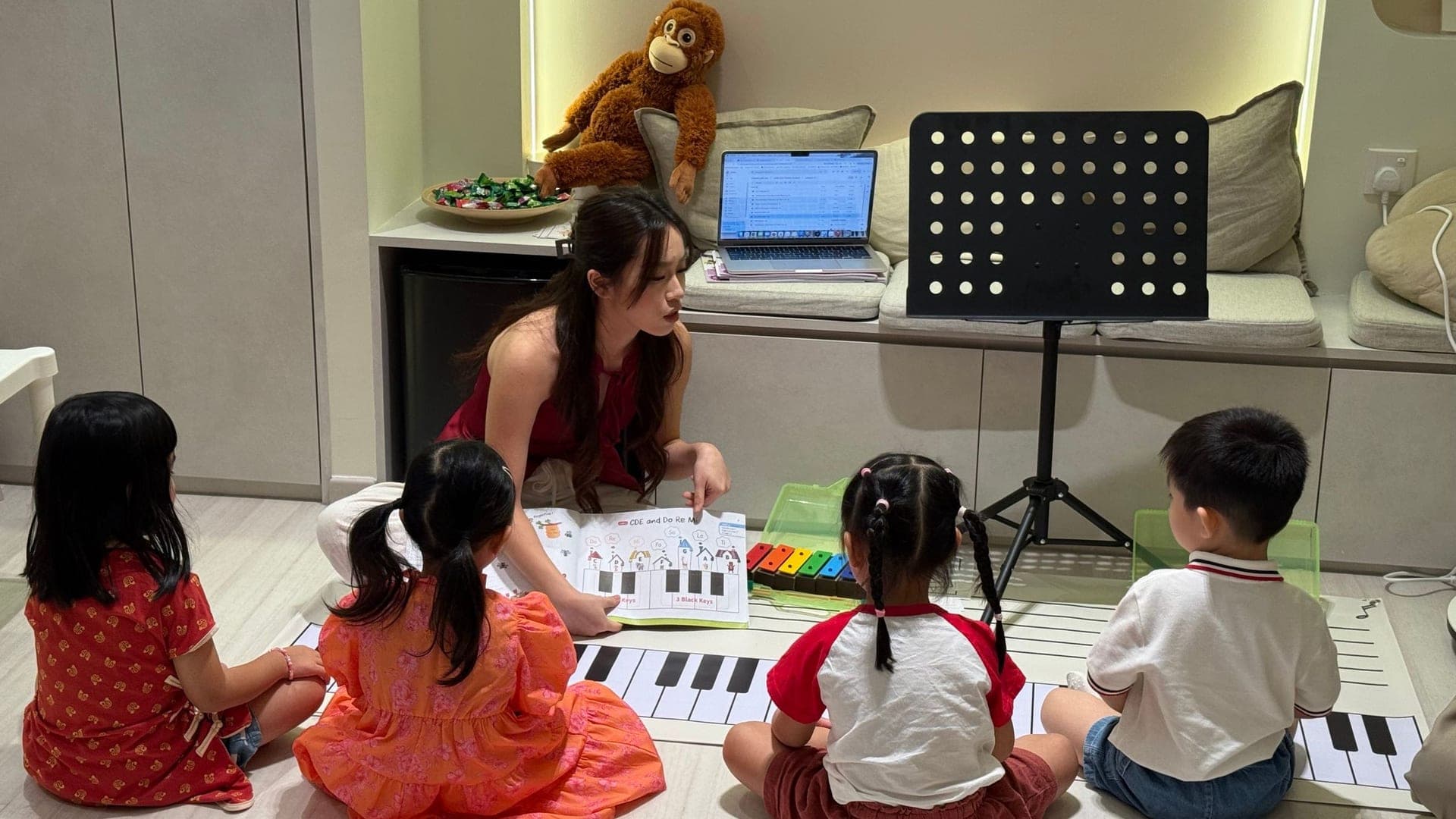
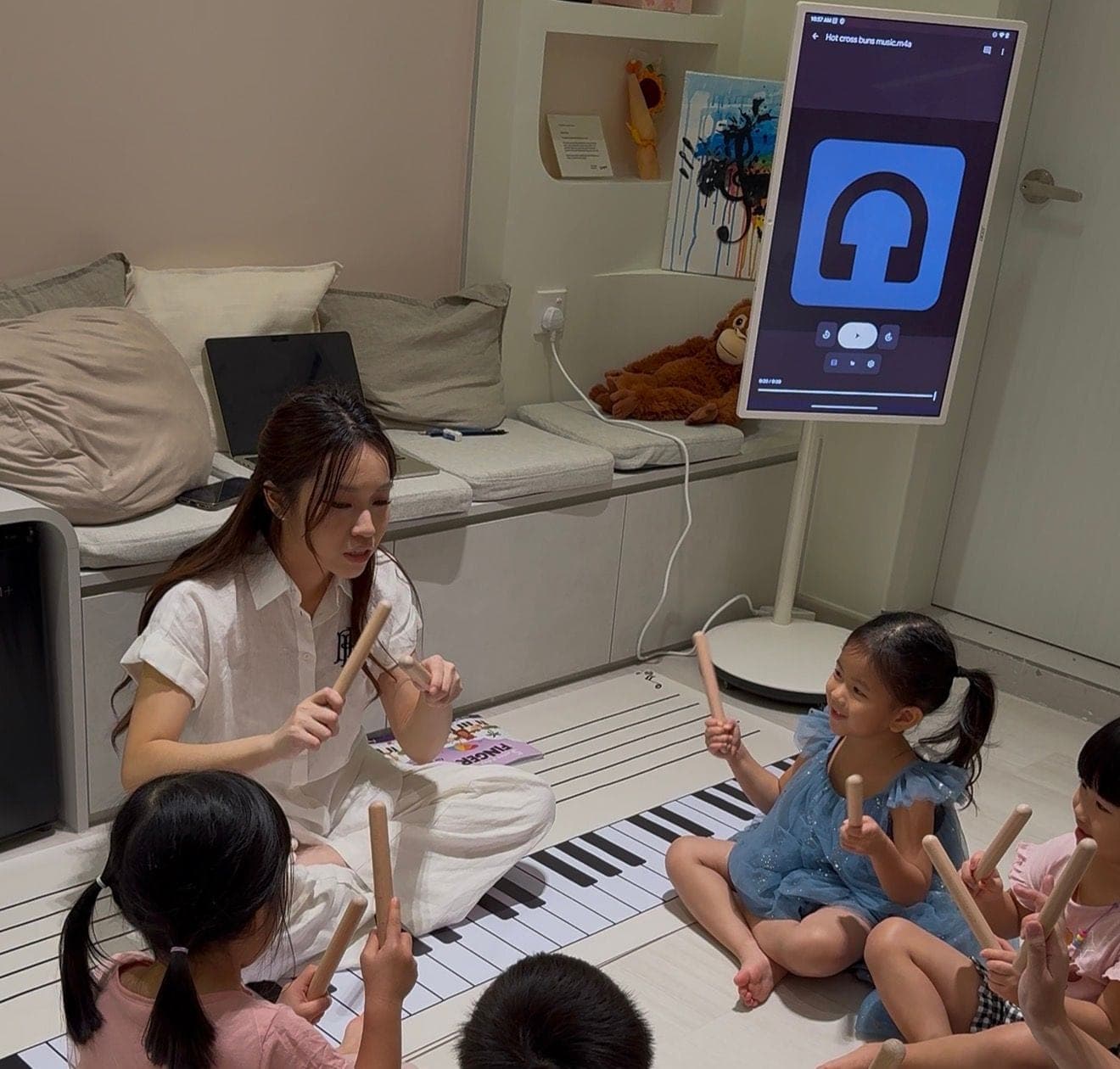
At three and four, a small group has real advantages. Children learn by watching and copying each other, songs and games are more fun with friends, and sharing the keyboard teaches patience and turn-taking. The variety of a group class also suits short attention spans.
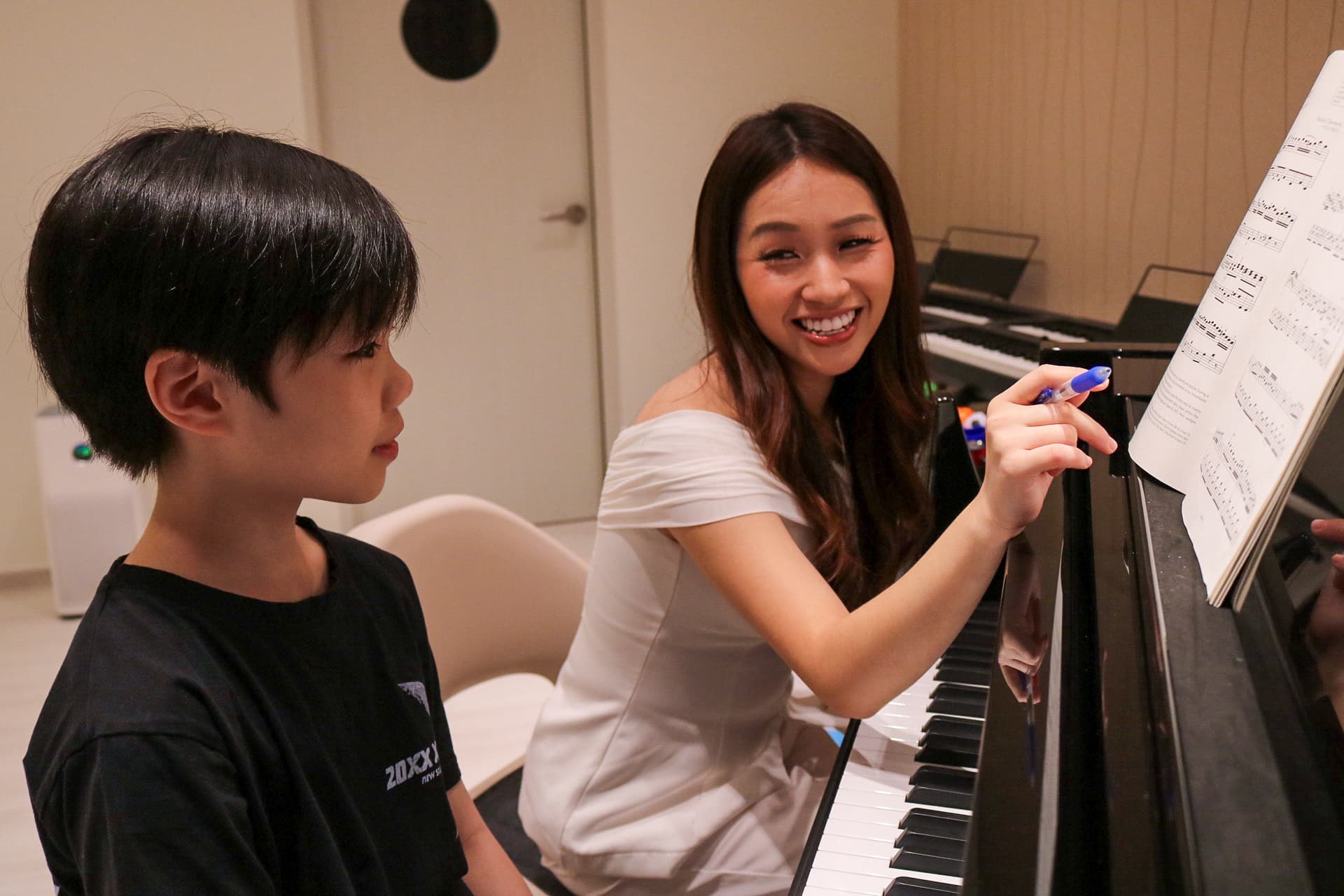
One-to-one lessons come into their own as children grow, with every minute tailored to one child and progress at exactly their pace. Young beginners are very welcome in our individual piano lessons too. Not sure which fits your child? Just ask and we will advise!
What to look for in a class for little ones
If you are comparing classes, these are worth asking about:
- Small groups, so every child gets real attention and time at the keyboard
- Lots of variety: songs, movement and games rather than long stretches of sitting still
- Real piano skills alongside the fun, so children are ready for formal lessons later
- A clear path forward: a structured progression, not one-off sessions
- A warm, encouraging teacher, because at this age confidence is everything
Little Stars: from first notes to Grade 1 in two years
Little Stars is our two-year, small-group piano programme at our Bukit Merah studio in Singapore, built around everything in this guide: games, movement, singing and plenty of time at the keyboard. To the children it feels like play, while real skills quietly take root.
Over two years, children work through Level A and then Level B. After the two years, they start Grade 1. A child who joins at three and a half starts Grade 1 at around five and a half.
- Ages: 3.5 to 4.5
- Class size: maximum 6 children
- Lesson length: 60 minutes
- When: Saturday and Sunday mornings
- Terms: 4 terms a year, 10 lessons per term
- Progression: Level A and Level B over two years, then Grade 1
- Fees: $45 per class
- Next intake: January 2027
Lessons are curated by Teacher Jovanna and Teacher Sarah. Registration for the January 2027 intake is now open: find out more about Little Stars or register for the 2027 intake, and we will be in touch as soon as places are confirmed.
Questions parents ask
Can a 3 year old learn piano?
Yes, with the right kind of lesson. Little Stars welcomes children from 3.5, and for little ones aged 2 to 3, our Music Explorers class is coming soon.
Does my child need to read first?
No. Children this age learn through songs, colours, pictures, stories, movement and play. Little Stars is designed for little ones with no prior musical experience.
What comes after Little Stars?
Grade 1! Over two years, children move through Level A and Level B, and then start Grade 1 with the rhythm, listening and keyboard foundations already in place.
If your little one cannot walk past a piano without pressing a key, they may be more ready than you think! We would love to meet them. See you soon!
Sources
- Ministry of Education Singapore: Preschool curriculum and the Nurturing Early Learners framework
- Hallam, S. (2010). The power of music: its impact on the intellectual, social and personal development of children and young people. International Journal of Music Education, 28(3)