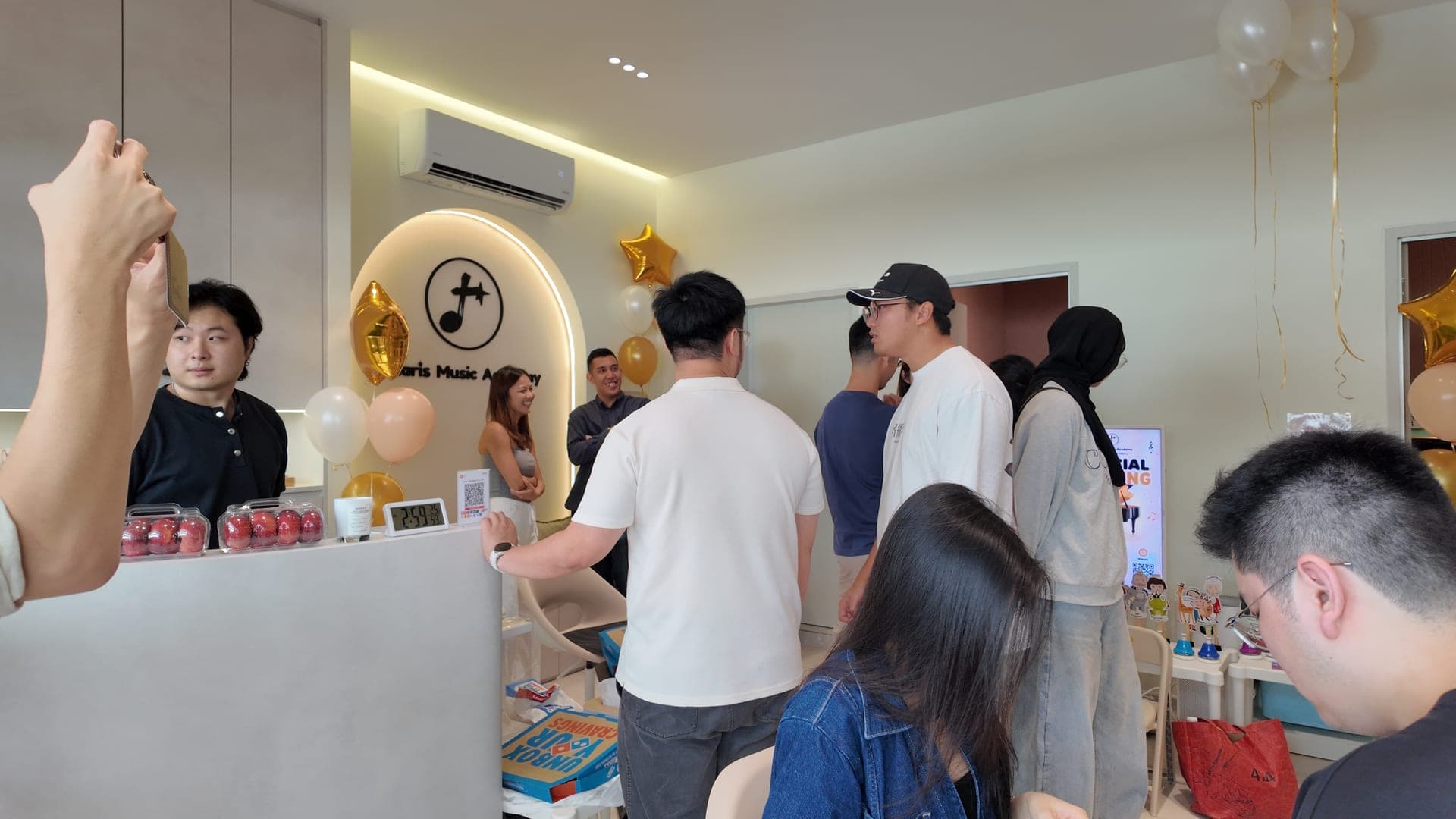
This year, two of our students won Gold at an international competition. Parent after parent tells us their child looks forward to every lesson. And at our official opening, the word most guests said the moment they walked in was "cosy".
So what makes Polaris different? It starts with how we teach. Here is our answer, in our own words and in the words of our families.
1. A modern approach, for how children learn today
Children today learn differently from the way many of us did. They grow up with screens, short videos and instant feedback. They learn best by doing, and they want to understand why something works, not just repeat it. Hours of drills with no context, and months of waiting before they play a piece they love, lose many of them along the way.
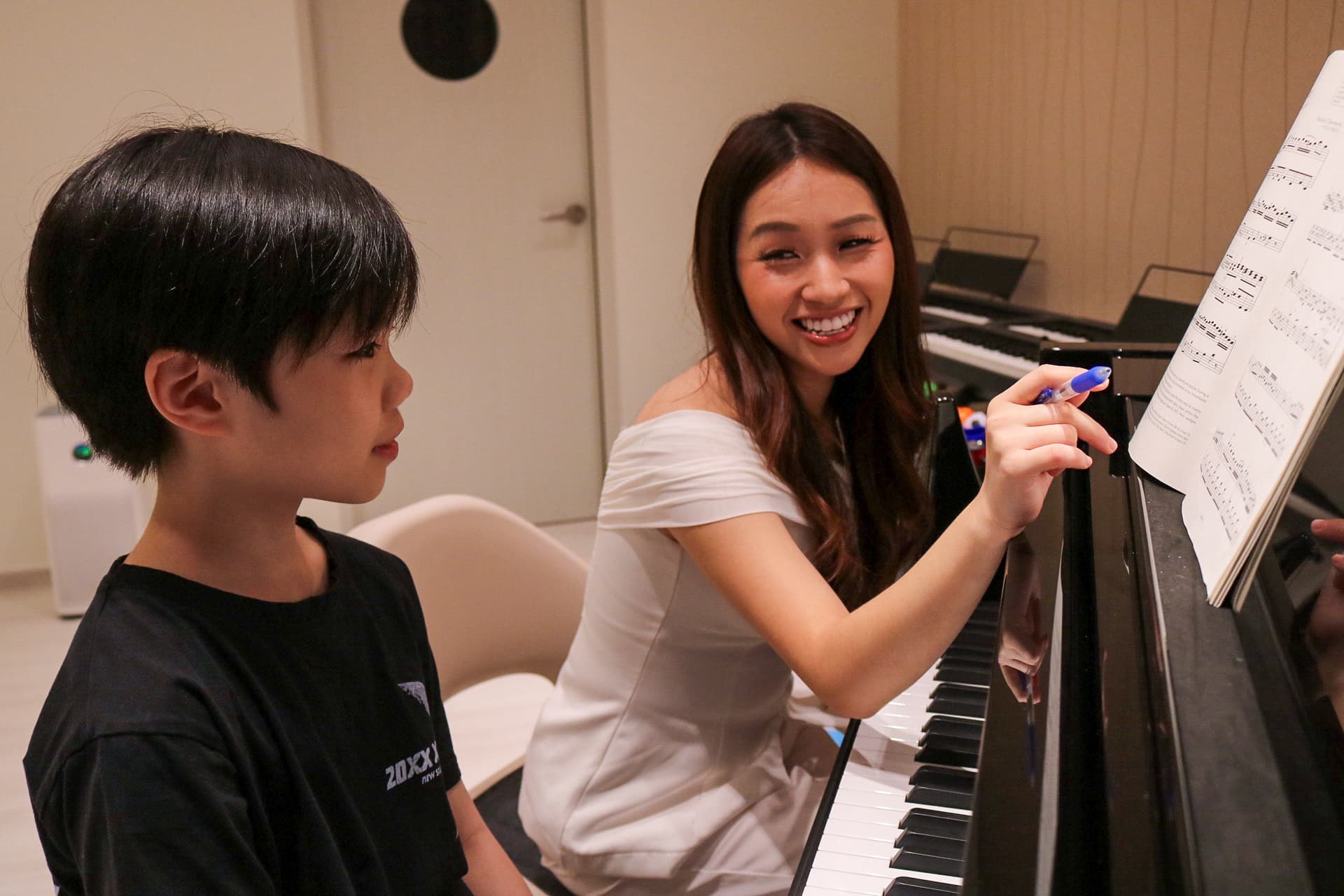
So we teach the way they learn. Ideas are brought to life with imagery, stories and games, so they stick. Rhythm is felt through clapping and movement before it is written down. Music on the studio screen sets the beat for our youngest students. And students learn to look through a score before they sight-read it, so they understand the music instead of just copying notes. The foundations are as rigorous as ever. The way we build them is made for today's children.
We also create our own teaching methods. When an idea is hard to grasp, our teachers find a new way in, through a story, a picture or a game, so it clicks for each child. One parent shared how her daughter learnt that "C Major and A minor are actually sisters", a simple image that made key signatures easy to remember.
It makes learning music feel playful and exciting rather than rigid.
Jack, Charlie's Dad
2. Teachers chosen with care
We receive a huge number of applications from teachers who want to join Polaris, and we choose only those who fit our modern approach. Every Polaris teacher is chosen for strong qualifications, a genuine gift for teaching children and the ability to teach the way today's children learn. Each brings a strong musical background and a professional approach to teaching, and together they hold every lesson to the same high standard. You can meet our teachers here.
Every Polaris teacher holds, or is about to complete, a music diploma or higher. Many piano teachers teach with a Grade 8 certificate, and we set the bar higher on purpose. Grade 8 is the top of the graded exams for students, and it shows how well someone plays. A diploma is the next level of qualification beyond Grade 8, with deeper study of performance and musicianship and, for many of our teachers, the craft of teaching itself. Playing well and teaching well are different skills, and our families deserve both.
Since learning with you, I've seen him become much more confident and interested in playing, and he is now more willing to practise and learn new songs.
Esther, Noah's Mum
3. Lessons shaped around your child
There are no strict, one-size-fits-all lesson plans at Polaris. Every lesson is shaped to the student's pace, personality and goals, because no two children learn the same way.
She thoughtfully customises Mika's musical progression, balancing technique and musicality in a way that keeps lessons engaging and achievable.
Quan Rong, Mika's Dad
4. Strong foundations from the very first lesson
Technique, posture, rhythm, sight-reading and listening skills are built carefully from day one. Music theory is part of every individual lesson up to Grade 5, which matters because ABRSM asks students to pass Grade 5 Theory, or an accepted alternative, before they can take the Grade 6, 7 or 8 practical exams. And our teachers prepare students for ABRSM practical examinations with solid technique and real musical understanding, well beyond the exam itself.
She doesn't just teach her how to play, but helps her to understand how the music is meant to sound and feel like.
Jasmine, Ellie's Mum
5. High standards, joyful lessons
Serious piano education does not have to feel serious. Our lessons use games, movement, stories and plenty of encouragement, so children look forward to coming back every week.
She makes every lesson engaging and enjoyable, and he is always excited to learn and play.
Xin Ee, Ian's Mum
And joy does not mean easy. As one of our students put it:
Although she may be a bit strict, she still makes the lesson very enjoyable.
Kyla, student of Teacher Sarah (11)
6. Real results
Structured progression and regular performance opportunities help our students grow into confident musicians. This year, Danish and Alyssa won Gold at the APCS International Music Competition 2026, and seven-year-old Ellie took Silver at the Oxygen Music Festival. Teacher Yu Mu's students hold a 100% Merit and Distinction rate in ABRSM examinations. Every award is celebrated on our Awards & Achievements wall.
7. Honest reviews and testimonials, always
We never offer discounts, gifts or anything else in exchange for Google reviews or testimonials. Every review and testimonial of Polaris is written by a family or student who chose to share their experience, because we believe reviews only help other parents when they are honest. Offering incentives for reviews also goes against Google's own policies.
8. A portfolio for those who want one
For students who want to take their music further, we help them build a portfolio of performances, recordings and achievements, the kind of record that matters for competitions, DSA applications and beyond. One of our students, Shayne Ko (@shaynemusicsg), performs around Singapore, from Dhoby Ghaut MRT to the Marina Bay boardwalk. The Straits Times featured him in its story on Singapore's youngest buskers and how they balance performing with school.
9. A studio built for music
Our main room is a 350 sqft teaching room centred on a Pearl River GP150 grand piano. Our two upright rooms are soundproofed and acoustically treated, each with a Yamaha U1PE upright piano. It is the kind of room where a student can really hear themselves play, which is exactly why Danish and Alyssa filmed their Gold-winning competition videos right here.
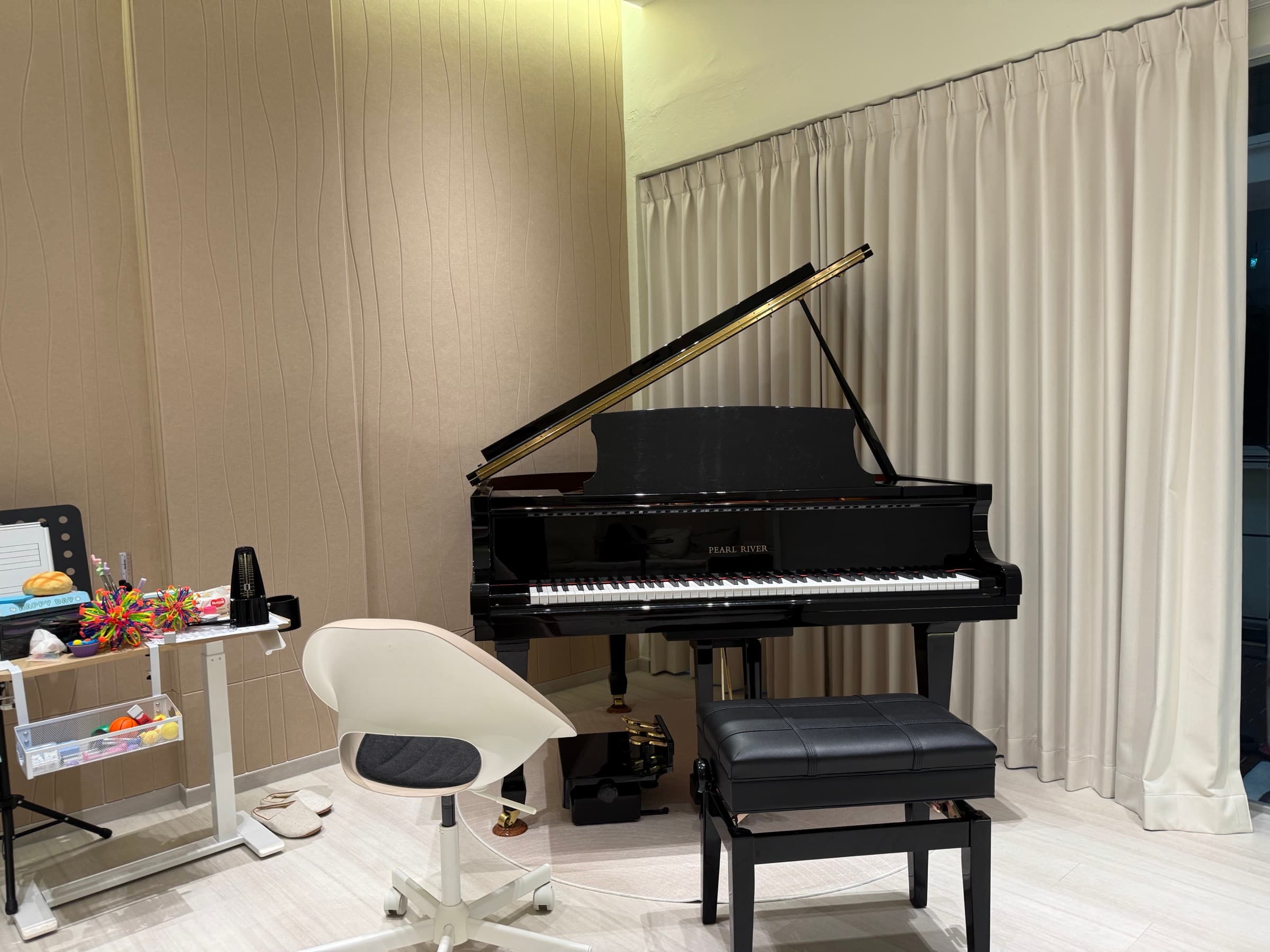
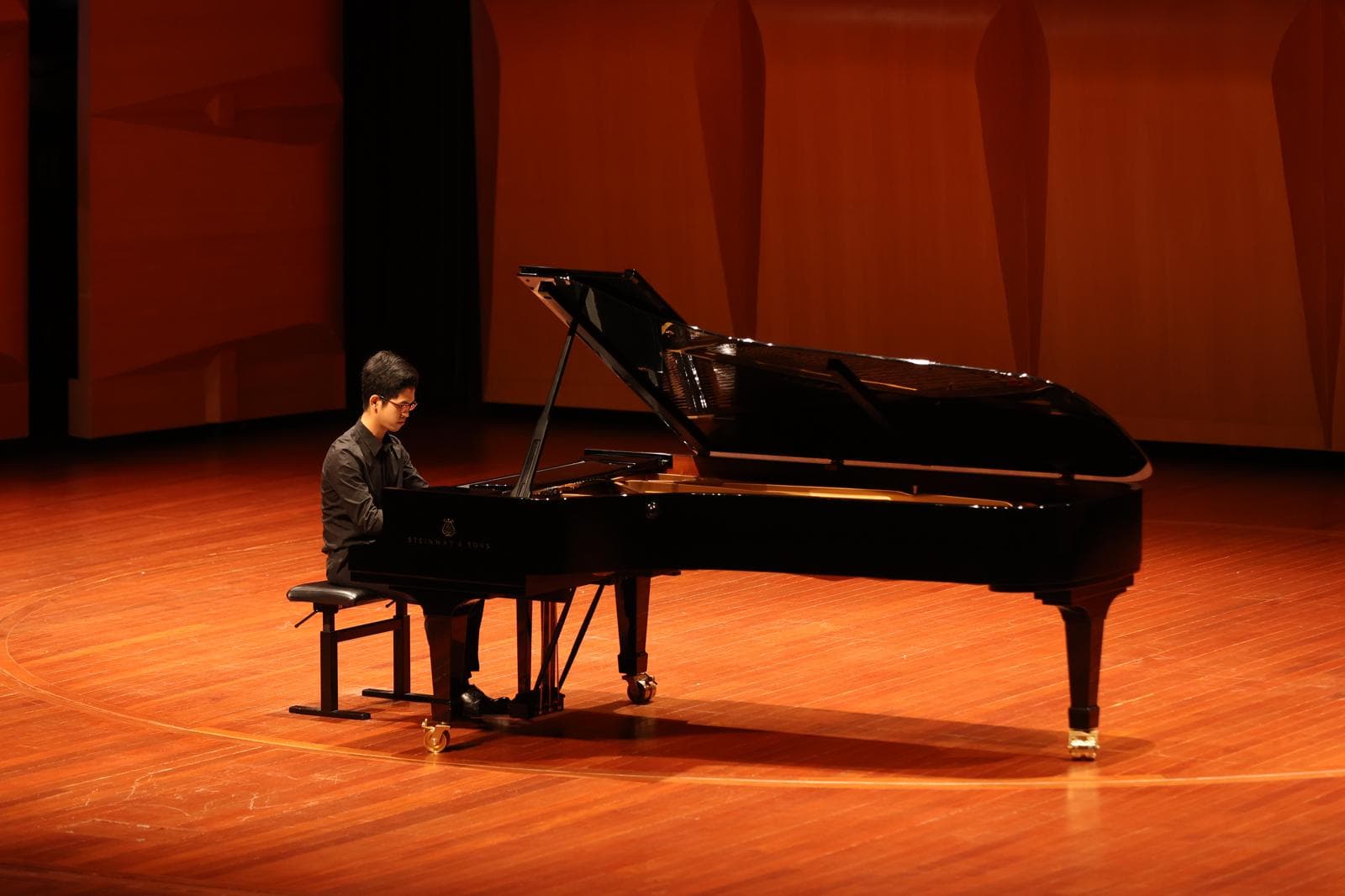
And there is more to come. In November 2026, our new performance space opens just down the corridor, with a platform stage, a grand piano, soundproofing and acoustic treatment, built for recitals, rehearsals and group classes.
10. A path for every age
- Ages 3.5 to 4.5: Little Stars, our small-group class of up to 6 children, where little ones start Grade 1 after two years.
- Children, teens and adults: individual piano lessons from beginner to diploma, plus individual violin lessons.
- From January 2027: group theory classes led by Teacher Yu Mu, from beginner to advanced.
Whether your child is three and a half or you are finally starting piano for yourself, there is a place for you here.
The best way to feel the difference is to see it for yourself. We would love to show you around. Looking forward to seeing you soon!
Sources
- ABRSM: Diplomas
- ABRSM: Piano Practical Grades syllabus 2025 and 2026, including the prerequisite for Grades 6 to 8 (PDF)
- Google: Prohibited and restricted content for Maps contributions, including incentivised reviews
- The Straits Times: Singapore's youngest buskers (30 January 2026)