Some Primary 6 pupils sit for the PSLE already holding an offer from schools like Raffles Institution, Raffles Girls' School or ACS (Independent). How? Through the Direct School Admission exercise, where secondary schools can offer places for a talent like music, months before PSLE results are out.
And it does not stop there. MEP students take Higher Music, which MOE allows to count as a humanities subject for junior college and polytechnic admission.
If your child plays the piano, here is what every parent should know about DSA and the Music Elective Programme (MEP).
What is DSA?
The Direct School Admission exercise (DSA-Sec) lets Primary 6 pupils apply to secondary schools based on their talents and achievements, and music counts under the performing arts. In the 2026 exercise, applications ran from 6 May to 2 June. Schools then ran their own auditions, interviews and trials, and gave every applicant an outcome by 28 August. Students with an offer rank up to three schools in October, and the final allocation comes with the PSLE results in late November. MOE announces the dates each year, so watch for the 2027 exercise around the same time.
A few things worth knowing:
- There are no application fees, and each school sets its own requirements and audition. Always read the school's own DSA page.
- A DSA place is a commitment. Once your child is allocated a school through DSA, they cannot submit school choices in the Secondary 1 posting or transfer after PSLE results are released. Choose schools you truly want.
What is the Music Elective Programme (MEP)?
The MEP is MOE's most in-depth music programme for secondary students. It runs for four years from Secondary 1 and aims to develop "practitioners, scholars, advocates and leaders in the arts". It is offered at ten schools:
- Anglo-Chinese School (Independent)
- Catholic High School
- CHIJ St. Nicholas Girls' School
- Crescent Girls' School
- Dunman High School
- Methodist Girls' School
- Raffles Girls' School (Secondary)
- Raffles Institution
- Tanjong Katong Girls' School
- Temasek Junior College
In 2026, nine of the ten MEP schools offered a DSA route into the programme (see the school-by-school table below). It is not the only way in, though. Students who enrol in an MEP school can try for the programme through the school's selection exercise in Secondary 1, and students in schools without the MEP or the Enhanced Music Programme can apply for an MEP Centre at ACS (Independent) or Dunman High School, with lessons on a weekday afternoon.
MEP students take Higher Music as an examination subject (G3 Higher Music from 2027). MOE allows it to be used as a humanities subject for junior college, polytechnic and ITE admission, though it does not earn any bonus points.
The MEP costs nothing extra, and can lower school fees. MEP students pay no additional school fees. At the independent schools that offer it (ACS (Independent), Methodist Girls' School, Raffles Girls' School and Raffles Institution), MEP students also receive a subsidy on their school fees of up to $2,400 a year, whatever their nationality. Students already receiving the maximum $2,400 Edusave Scholarship for Independent Schools do not get the subsidy on top, and MEP Centre students enrolled at other independent schools do not qualify.
DSA and MEP for junior college, too
DSA does not stop at Primary 6. Through DSA-JC, Secondary 4 students can apply to junior colleges based on talents and achievements beyond their O Level results, and music is one of them. In 2026, applications opened on 6 May and closing dates varied by college (Temasek Junior College closed on 28 June), so expect the 2027 exercise around the same time. Each college sets its own criteria. Temasek Junior College, for example, looks for Distinctions in O Level Music or Higher Music in school examinations, musical leadership in a CCA, or achievements in music at national or international level.
There is a Music Elective Programme at junior college level too, offered at six schools: Anglo-Chinese Junior College, Anglo-Chinese School (Independent), Dunman High School, Eunoia Junior College, Raffles Institution and Temasek Junior College. Students take H2 and H3 Music at A Level. A secondary MEP place does not carry over automatically: a student first needs a place at one of these colleges, and a pass in Music or Higher Music at secondary level then admits them to the JC MEP. Students without one must pass a selection exercise.
Teacher Yu Mu took this path himself, joining the MEP at junior college.
What auditions usually look like
Every school runs its own audition, but you can usually expect some of these:
- Prepared pieces. For the MEP selection exercise, MOE asks for 2 contrasting solo pieces on an instrument or voice, lasting no longer than 5 minutes in total. Each school sets its own DSA audition, so check its DSA page for the exact requirements.
- Sight-reading and scales, at some schools. Tanjong Katong Girls' School listed both for 2026.
- A listening test. The MEP selection exercise includes one: 8 to 10 short extracts from a range of musical traditions, with 25 multiple-choice questions on things like melody, harmony, rhythm, texture and form.
- A portfolio. Some schools ask for one before they shortlist. Raffles Institution, for example, asked 2026 music applicants for a personal statement of up to 500 words, a recommendation letter from a music teacher and their top five music-related awards, accomplishments or certifications from the last three years.
- An interview about your child's interest in music
Exam certificates help show progress, but an audition is about how your child plays and thinks musically on the day.
School by school: what the 2026 music DSA asked for
We read the 2026 DSA criteria published by each of the ten MEP schools. Here is what each one asked of music applicants. Schools change their requirements every year, so treat this as a guide to what to expect and always check the school's own page for the current exercise.
| School | For | What applicants went through | Prepared pieces | MEP required? |
|---|---|---|---|---|
| ACS (Independent) | Boys | Audition for shortlisted applicants | Not published | Not stated |
| Catholic High | Boys | Audition, then a group interview | Not published | Not stated |
| CHIJ St. Nicholas Girls' | Girls | No music DSA route in 2026 | n/a | n/a |
| Crescent Girls' | Girls | Audition, written test and interview | Two contrasting pieces | Yes, plus Concert Band or Choir |
| Dunman High | Boys and girls | Written theory and aural test, then audition and interview | 1 or 2 pieces, 5 minutes maximum | Yes |
| Methodist Girls' | Girls | Video of two pieces (or a composition portfolio), 45-minute listening test, interview with aural test | 2 contrasting, 5 minutes maximum (video) | Yes, plus a music CCA |
| Raffles Girls' | Girls | Video and scores, live performance, musicianship test (aural and composition or improvisation), interview | 2 contrasting, at least 4 minutes (video) | Music CCA required |
| Raffles Institution | Boys | Portfolio, theory test, audition and interview | Shared with shortlisted applicants only | Yes |
| Tanjong Katong Girls' | Girls | Optional 1-minute audio clip, audition that may include aural, sight-reading, scales and a listening and theory test, interview | 2 contrasting, 2 to 5 minutes | Not stated |
| Temasek Junior College (IP) | Boys and girls | Written listening test, audition with aural tests and a short interview | 2 contrasting, 5 minutes in total | Yes |
What stands out:
- No school states a required exam grade. Not one of the ten names an ABRSM or other grade for 2026.
- Playing is not enough on its own. At least six of the nine schools with a music route added a written, listening or musicianship test, so theory and aural matter as much as the pieces.
- Some schools decide who to audition from what you send first. Methodist Girls' and Raffles Girls' asked for performance videos, and Raffles Institution asked for a portfolio, before shortlisting anyone.
- Check which instruments count. Methodist Girls' accepted only strings, guitar, piano, voice or composition in 2026, so wind, brass and percussion players could not apply there.
How to prepare
- Start early. Primary 4 and 5 are the years to build repertoire, technique and confidence.
- Polish two contrasting pieces your child can play well under pressure.
- Sight-read and train the ear a little every day. These are hard to cram.
- Get the theory right. Theory sharpens sight-reading and aural, and it is the foundation of Higher Music. ABRSM also asks for a pass in Grade 5 Music Theory (or Practical Musicianship, or a jazz subject) before the Grade 6, 7 and 8 practical exams.
- Perform often. Recitals, competitions, even playing for family, so the audition room feels familiar.
- Research schools early, including which ones offer the MEP and what each audition asks for.
Common questions
What ABRSM grade does my child need for DSA music?
None is required. We read the 2026 DSA criteria of all ten MEP schools, and none of them states an ABRSM or other exam grade. MOE also states that MEP applicants do not need any external music certification, though they should play fluently. Raffles Institution lists ABRSM certification only as one example of what can go into a portfolio, and Raffles Girls' School accepts recent exam mark sheets as supporting documents. Certificates help show progress, but the tests and the audition are where the decision is made.
Does a DSA place for music mean my child must take the MEP?
At most schools, yes. For 2026, Raffles Institution, Dunman High, Methodist Girls', Crescent Girls' and Temasek Junior College all stated it, and Raffles Girls' School required a music CCA. Check each school's DSA criteria before applying.
Can my child join the MEP without DSA?
Yes. Students who enrol in an MEP school can try for the programme through its selection exercise, and students in other schools can apply for an MEP Centre at ACS (Independent) or Dunman High School.
When should we start preparing?
DSA-Sec applications open around May of Primary 6, and auditions follow in July and August. That leaves little time to build repertoire from scratch, so Primary 4 and 5 are the years to start.
Learn with someone who has walked this path
At Polaris, DSA and MEP preparation is led by Teacher Yu Mu, who knows this road from the inside. He attained a Distinction in O Level Higher Music, then joined Singapore's Music Elective Programme at junior college, where he achieved an A in H2 Music, majoring in performance. He went on to a Diploma in Music with Distinction and a Bachelor of Music (Honours) from the Nanyang Academy of Fine Arts, conferred by the Royal College of Music, London.
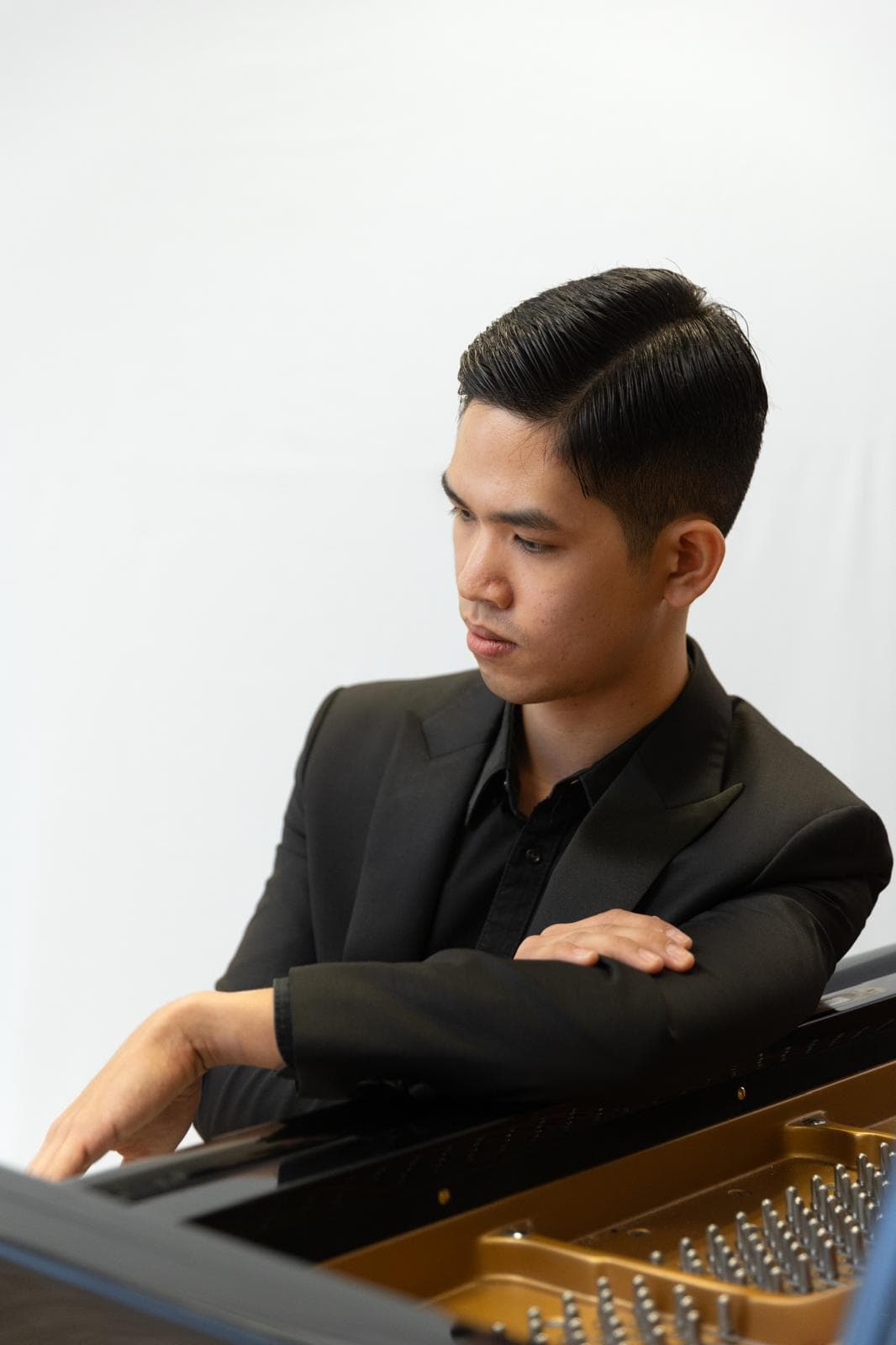
His accolades include:
- San San Music Merit Award
- LTCL Diploma in Piano Performance, with Distinction
- 2nd Place, Music Singapore International Piano Competition
- Gold, 8th Asia Arts Festival
- Silver, 7th Singapore Raffles International Music Festival
- Best Accompanist, NAFA Vocal Competition 2025
Today he guides students through performance preparation, music theory, aural skills and audition readiness for Higher Music, the MEP and DSA, and his students hold a 100% Merit and Distinction rate in ABRSM examinations.
Teacher Yu Mu is now taking new students for piano and theory. Meet Teacher Yu Mu to see his full background.
Why theory matters, and why it is only half the story
Theory is the quiet advantage in any DSA or MEP audition. It is what lets a child read a new piece quickly, hear what is happening in the music and speak about it with confidence in the interview. It sharpens sight-reading and aural, and it underpins everything in Higher Music.
But theory is only one part. Auditions are won at the piano: two beautifully prepared pieces, a steady hand when sight-reading and the confidence to perform in front of a panel. The strongest applicants build both, side by side.
Theory classes from January 2027
From January 2027, Teacher Yu Mu will lead our new group theory classes, from beginner through intermediate to advanced. They are best suited to students preparing for DSA, who need strong theory alongside their playing. Details will be announced on our programmes page.
Pair them with individual piano lessons, where theory is already taught up to Grade 5, and your child builds both halves at once: the understanding and the playing.
A real stage to prepare on
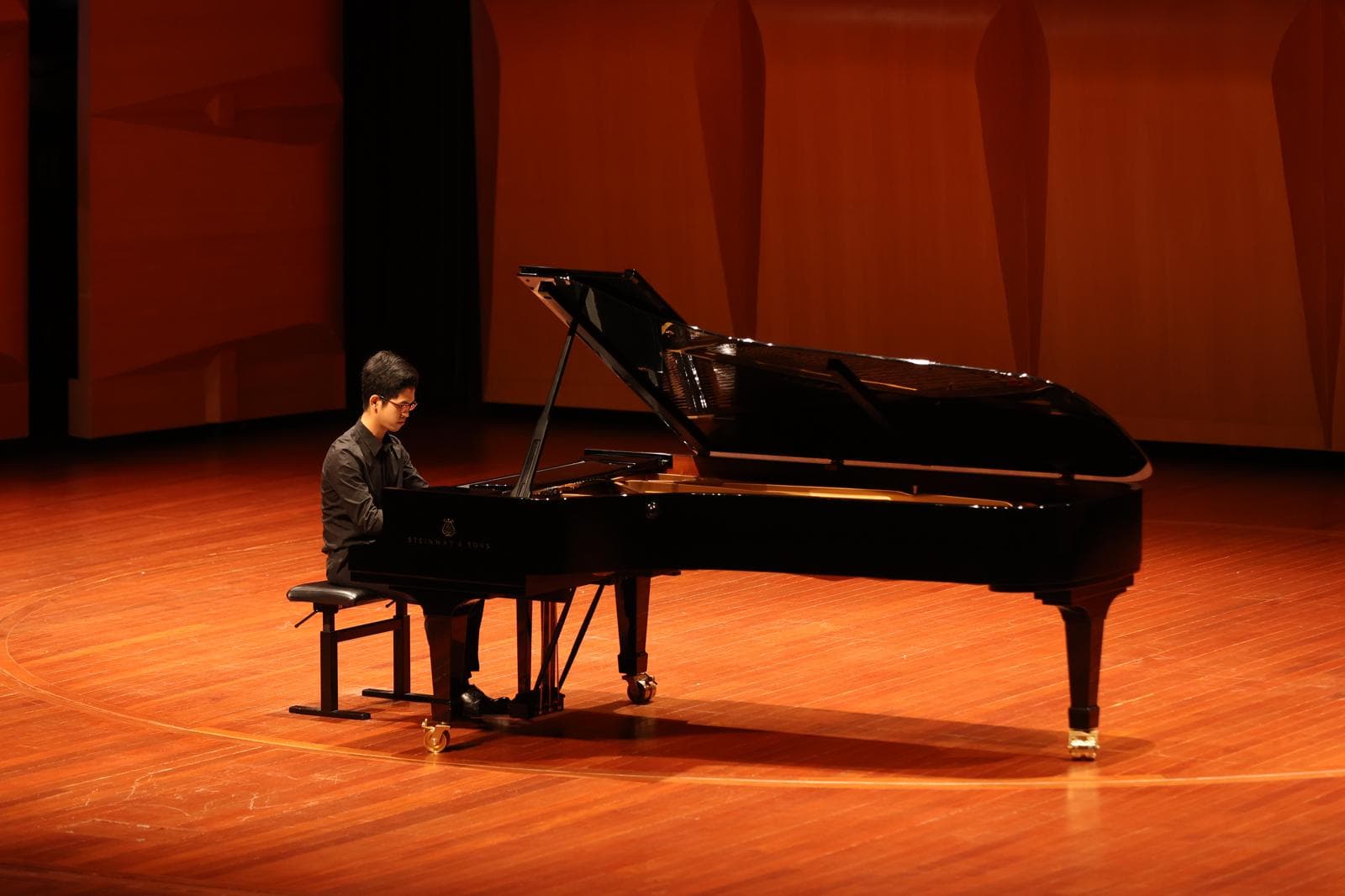
In November 2026, our new performance space opens just down the corridor, with a platform stage, a grand piano, soundproofing and acoustic treatment. For DSA and MEP hopefuls, that means a place to rehearse audition pieces on a real stage, practise performing in front of others and get used to playing under pressure, long before the day that counts. Together with Teacher Yu Mu's coaching and our theory classes, we can help your child prepare for every part of the audition.
If your child loves the piano and has their eye on a DSA or MEP school, the best time to start preparing is now. We would love to help you plan the road ahead. See you soon!
Sources
- MOE: Direct School Admission for secondary schools
- MOE: Music Elective Programme overview
- MOE: How to join the Music Elective Programme
- MOE: Where to take the Music Elective Programme
- MOE: MEP Centre selection exercise information and FAQ (PDF)
- Temasek Junior College: JC Year 1 (DSA-JC)
- ABRSM: Piano Practical Grades syllabus 2025 and 2026, including the prerequisite for Grades 6 to 8 (PDF)
School DSA criteria for 2026:
- ACS (Independent): 2026 DSA-Sec talent selection trials (PDF, archived copy)
- Catholic High School: DSA-Sec
- CHIJ St. Nicholas Girls' School: DSA 2026
- Crescent Girls' School: DSA to CGS
- Dunman High School: 2026 DSA-Sec selection process (PDF)
- Methodist Girls' School: DSA-Sec 1
- Raffles Girls' School: 2026 DSA-Sec information (PDF)
- Raffles Institution: 2026 Music DSA-Sec criteria and schedule (PDF)
- Tanjong Katong Girls' School: Direct School Admission
- Temasek Junior College: IP Year 1 DSA-Sec
Information checked on 8 October 2026. MOE and schools update their requirements each year, so always confirm with the school.